Introduction
As the cryptocurrency market continues to evolve and expand, investors are constantly seeking ways to optimize their trading strategies. With over $4.1 billion lost to DeFi hacks in 2024 alone, security and strategy have never been more crucial. In this article, we will compare two popular trading strategies: grid trading vs DCA strategy. Understanding these strategies can help you make informed decisions on your investment journey.
What is Grid Trading?
Grid trading is a strategy that involves placing buy and sell orders at predefined intervals around a set price level. This method allows traders to profit from market volatility by capitalizing on price fluctuations. The grid trading strategy essentially creates a “grid” of orders above and below the current market price, aiming to profit from these small price movements.
- Advantages of Grid Trading:
- Profit from market volatility.
- Automated trading reduces emotional decision-making.
- Flexible and can be adjusted based on market conditions.
- Disadvantages of Grid Trading:
- Potential for significant losses in trending markets.
- Requires constant monitoring for optimal results.
What is DCA (Dollar-Cost Averaging)?
Dollar-Cost Averaging (DCA) is an investment strategy where an investor divides the total amount to be invested across periodic purchases of a target asset. This method aims to reduce the impact of volatility by spreading out the investment over time.
For example, an investor could choose to invest a fixed amount of money every month, regardless of the asset’s price. By doing so, they can potentially lower their overall cost per unit by buying more units when prices are low and fewer when prices are high.
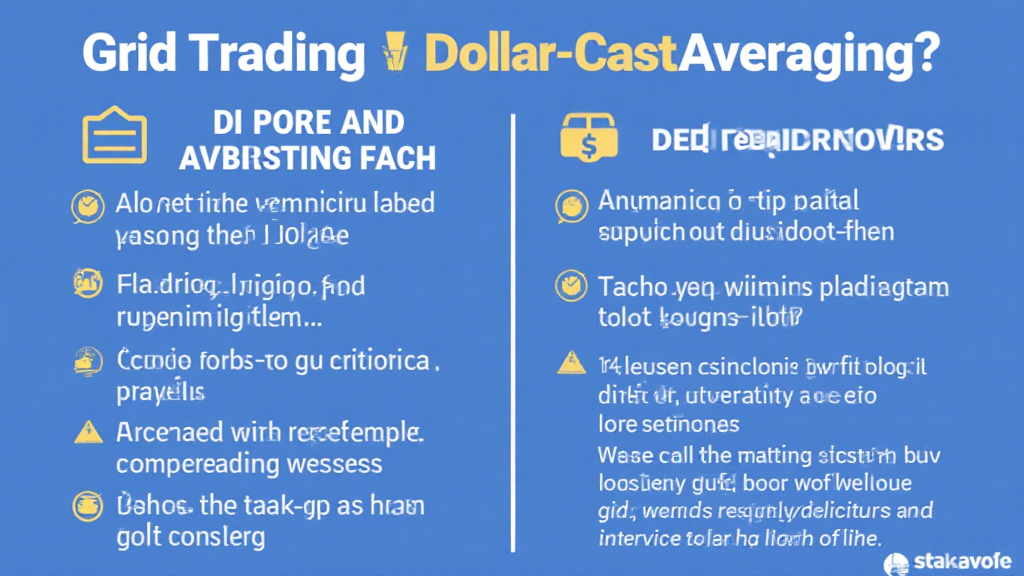
- Advantages of DCA:
- Reduces the impact of market volatility.
- Encourages disciplined investing.
- Avoids the pitfalls of trying to time the market.
- Disadvantages of DCA:
- Possibly missing out on potential gains in a bull market.
- Requires patience and a long-term outlook.
Grid Trading vs DCA Strategy: A Comparative Analysis
To effectively choose between grid trading and DCA strategies, it’s essential to consider several factors, including your risk tolerance, investment goals, and market conditions.
Market Conditions
Grid trading thrives in volatile market conditions where prices fluctuate significantly. In contrast, DCA may be more effective in a stable or slowly growing market, where the overall trend is upwards. Here’s a breakdown:
- Volatile Markets: Grid trading is preferable when price movements are erratic, allowing for many opportunities to capitalize.
- Stable Markets: DCA is ideal for a long-term investment approach that mitigates risks associated with trying to time the market.
Risk Tolerance
Your risk tolerance plays a crucial role in determining which strategy suits you best. Grid trading may appeal to those who are comfortable with active management and can handle the potential for loss in a trending market. Conversely, individuals who prefer a more passive investment approach may favor DCA.
Time Commitment
Grid trading requires a considerable time commitment to monitor the market and adjust strategies accordingly. In contrast, DCA allows investors to set it and forget it, making it more suitable for busy individuals.
Real-World Application: Case Studies
Considering various market scenarios can further elucidate the effectiveness of grid trading and DCA strategies.
Example: Grid Trading Scenario
Imagine a trader using grid trading in a volatile market:
- Current price of Bitcoin: $60,000
- Buy orders set at intervals of $1,000 ($59,000, $58,000, etc.)
- Sell orders set at $1,000 intervals above current price ($61,000, $62,000, etc.)
The trader profits as the price moves, but if Bitcoin enters a bear market, the trader could experience significant drawdowns.
Example: DCA Scenario
Now consider a DCA investor:
- Investing $100 monthly in Bitcoin over 12 months.
- If Bitcoin’s price fluctuates, the average cost per coin is minimized.
The DCA investor could weather market downturns better as the investment is smoothed out over time.
Conclusion: Which Strategy is Right for You?
Ultimately, the decision between grid trading and DCA strategy should hinge on individual circumstances. If you thrive in a rapidly changing market and have the time to commit, grid trading could offer lucrative opportunities. On the other hand, if you’re looking for a long-term investment approach with lower risks, DCA may be your best bet.
As you navigate the landscape of cryptocurrency investing, keep in mind that there is no one-size-fits-all solution. Assess your personal investment goals, risk tolerance, and time commitment to determine which strategy aligns with your financial aspirations.
In both scenarios, staying informed and adaptable to market conditions can enhance your overall investment performance. Remember, whether you choose grid trading or DCA, consistency in your strategy will ultimately drive your success.
For more insights into crypto trading strategies in Vietnam, check out our comprehensive guides and resources at hibt.com!